Skip to content
NavyCREATE. ADVANCE. EVOLVE.

Build Beyond
The Shore.

Segal Navy builds freighters, laboratory ships, and floating communities. The hull, the power, the cargo or the living quarters, and the shore watch are one vessel.

Explore The Programs.

Segal Navy builds freighters, laboratory ships, and floating communities. The hull, the power, the cargo or the living quarters, and the shore watch are one vessel.

Segal Logistics — Freight
Freight

Segal Logistics

Cargo ships with bays for dry freight, cold chain, or bulk.

Design & Mission Context

Segal Logistics is a freight hull you configure around the cargo. Modular bays, hybrid-electric power, and a shore connection so the ship and the port are one operation.

Freight operations connect the cargo bay with the route and the port. Loading, restraint, refrigeration where required, power, and maintenance must fit the same operating plan. The vessel's configuration is considered alongside the quay and the shore team responsible for the turn between voyages.

The bays. Dry, refrigerated, or bulk, arranged for the cargo you actually move.

The power. Endurance at sea, and shore power when the ship is alongside.

The port. Depth, weather, and a quay the hull was drawn to fit.
Explore Segal Logistics
Segal Research — Science
Science

Segal Research

A laboratory ship that holds station and works below the hull.

Design & Mission Context

Segal Research keeps a laboratory on station. Wet and dry labs, a sensor mast, and a moonpool put instruments and vehicles into the water the ship is holding.

The scientific task determines the working deck, laboratory utilities, and access to the water. Instruments and subsea vehicles need a safe path through deployment, recovery, and sample handling. Station keeping and the vessel's arrangement are developed around that sequence and the conditions of the proposed work.

Explore Segal Research
Segal Habitats — Life at sea
Life at sea

Segal Habitats

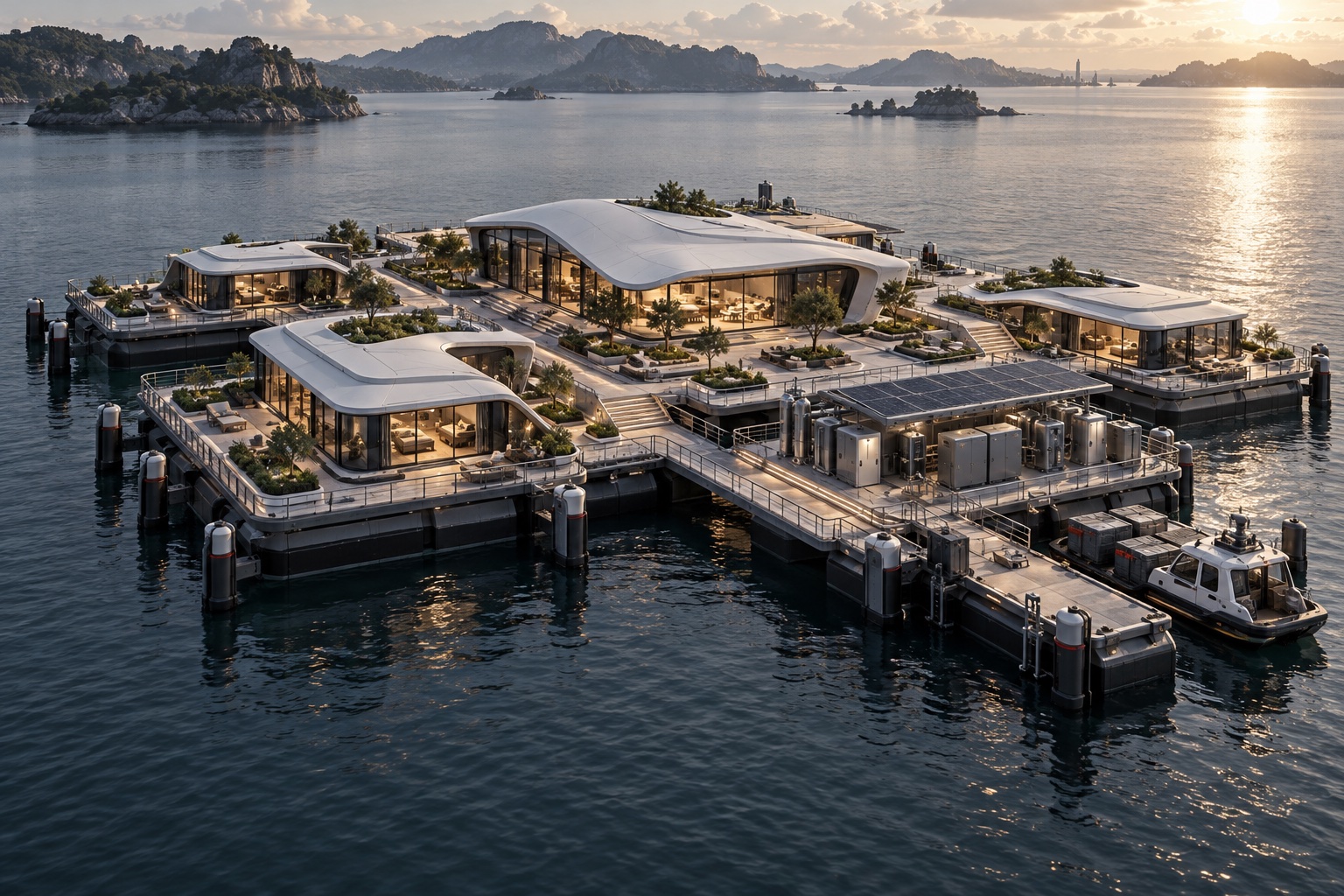
Floating communities with power, water, and a place to live.

Design & Mission Context

Segal Habitats is a modular living platform. Berths, a common hall, and a utility core, moored for the water of the site.

Living on water brings architecture and marine engineering into the same design. Private rooms, shared spaces, utilities, access, and resupply must fit the mooring and the site. The platform is considered as a community with ongoing service needs, rather than a collection of disconnected floating units.

The rooms. Berths and shared space, for the number of people who will live there.

The core. Power, water, and waste, in one service plant.

The mooring. Access, evacuation, and resupply for the water you chose.

Explore Segal Habitats
Helm — Autonomy
Autonomy

Helm

Navigation and autonomy for the vessels we build.

Design & Mission Context

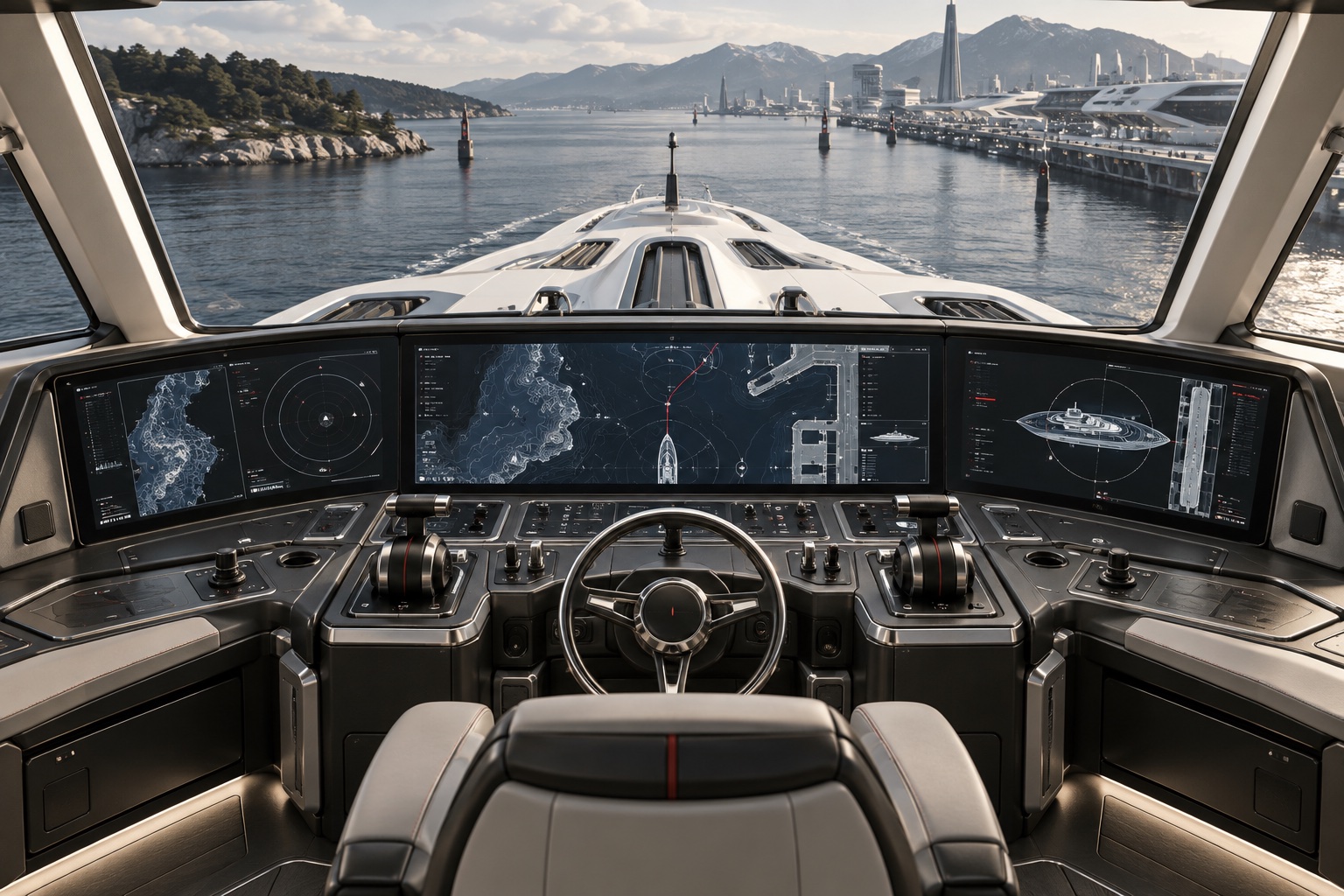
Helm is the onboard system that steers, docks, and keeps station, with a person in command when the water requires one.

The navigation system connects vessel state, environmental sensing, route planning, and control. Docking and station keeping have different demands from an open-water passage. Helm includes the operator's role and the behavior expected when communications or another part of the system becomes unavailable.

Explore Helm
Drydock — Design
Design

Drydock

Design the vessel around the route before steel is cut.

Design & Mission Context

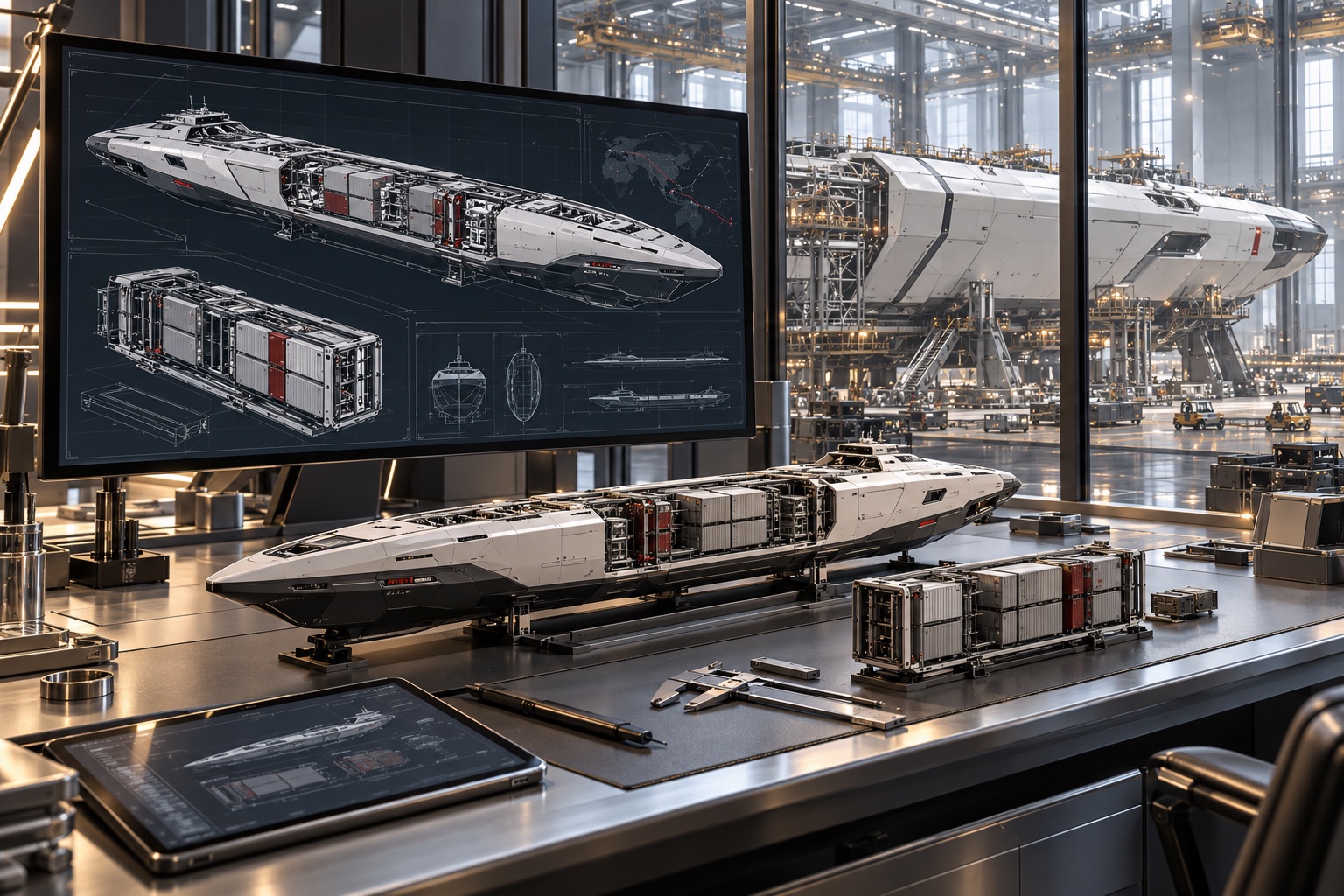
Drydock is the configuration desk for a Segal hull. Cargo, endurance, port, and power are decided together, so the ship matches the work.

A useful vessel configuration begins with the trade it must serve. Cargo, route, endurance, port access, handling, and power influence the hull and its internal arrangement. Recording those decisions together provides a clearer basis for engineering review and the changes that follow.

Explore Drydock
Tideline — Operations
Operations

Tideline

Run the fleet from shore.

Design & Mission Context

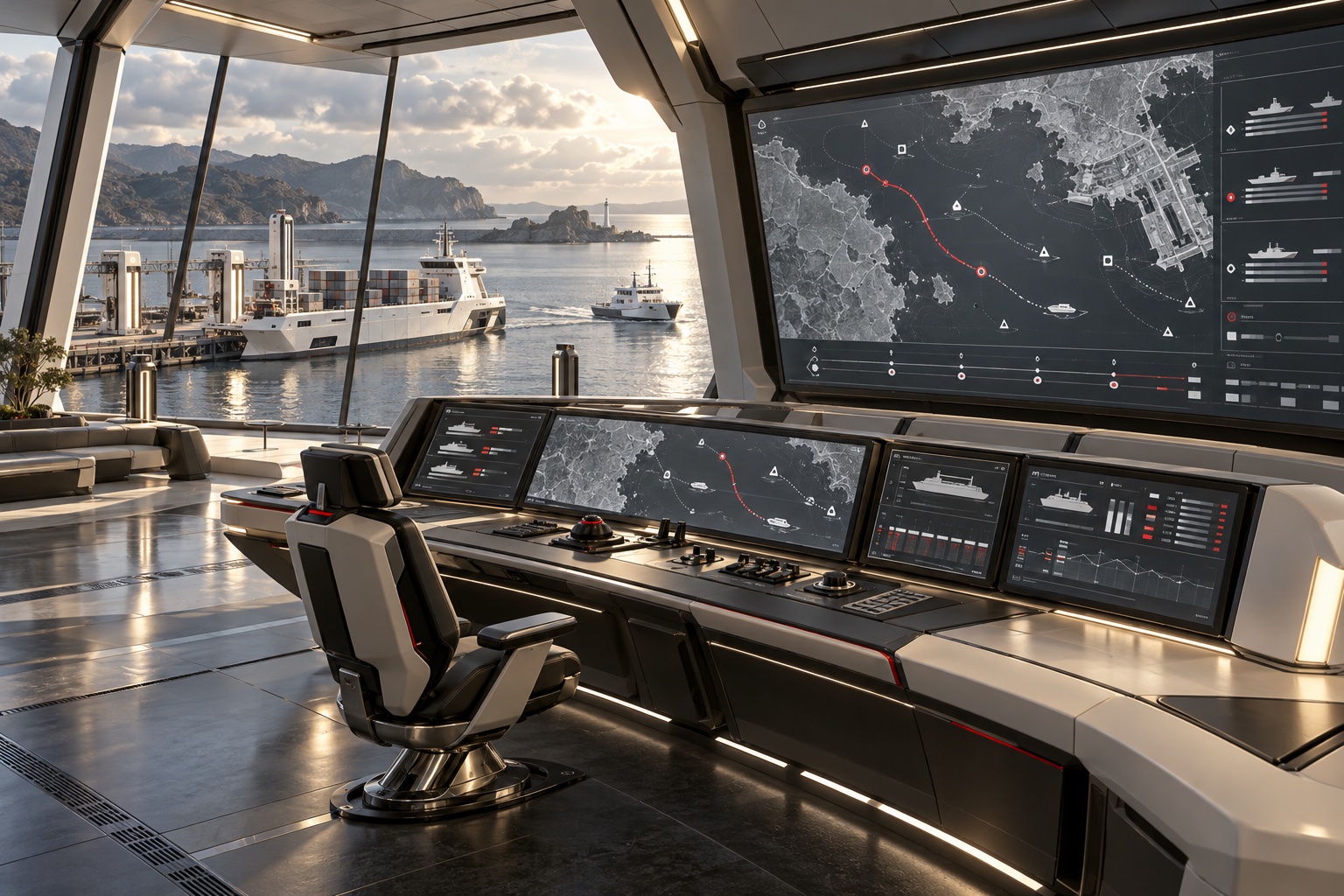
Tideline is the shore side of the operation: schedules, charging, cargo, and the watch on every vessel that is underway.

The shore team needs a view that connects an individual voyage with the fleet around it. Vessel state, location, schedule, charging, and maintenance all influence the next action. Tideline brings those operating questions into the same conversation as supervision and intervention.

Explore Tideline
Drayage One — Coastal freight
Coastal freight

Drayage One

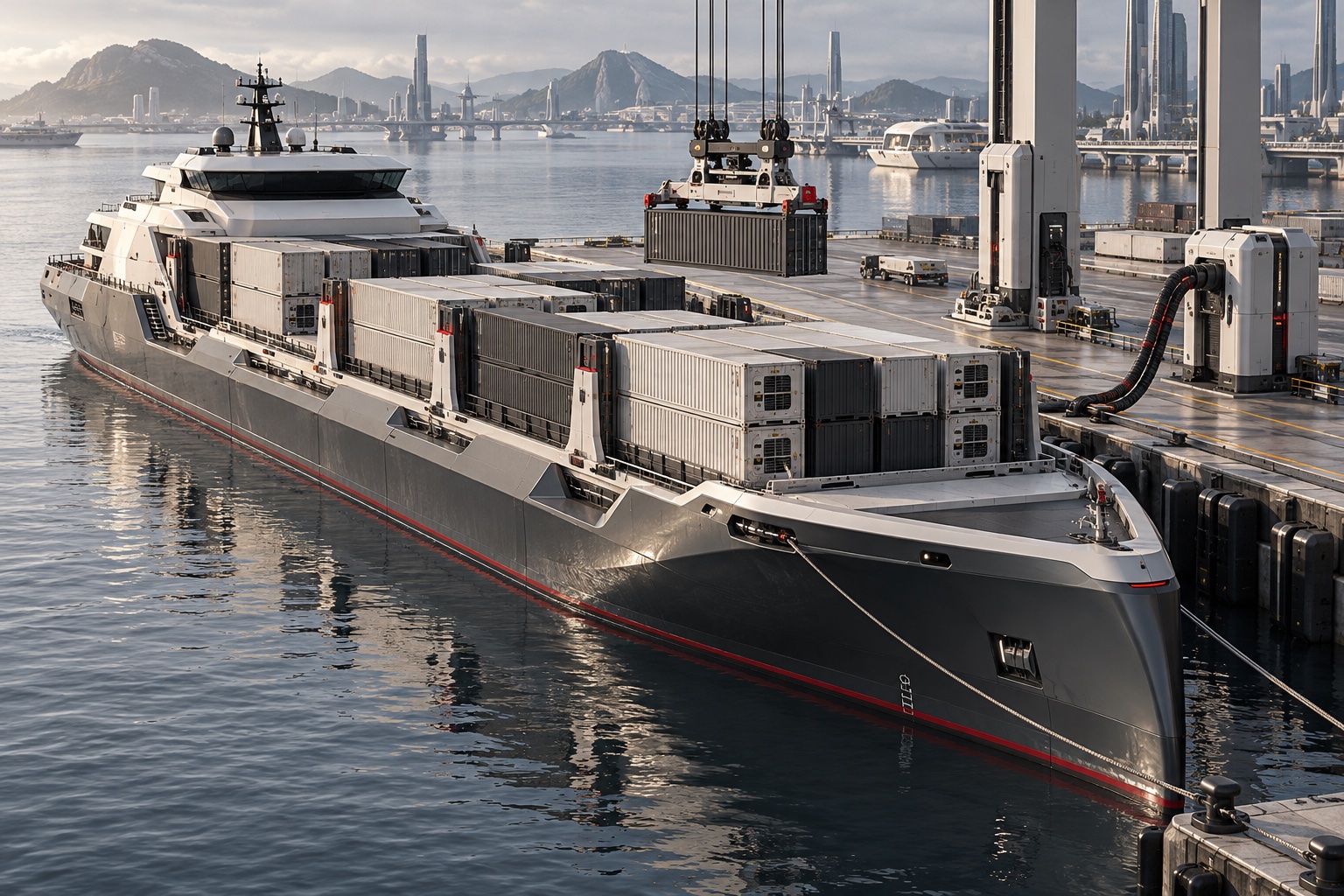
A coastal freighter for dry cargo and containers on a defined route.

Design & Mission Context

Drayage One is the shorter hull. Modular bays, shore charging, and navigation that a shore team can supervise. The ship, the quay, and the power between voyages are one operation.

Coastal freight depends on a repeatable relationship between the ship and its ports. Cargo handling, available berth space, charging, and turnaround requirements influence the vessel's arrangement. The route and supervision plan are developed with those practical constraints rather than added after the hull is defined.

The route. A coastal corridor, with a person in oversight and a ship that knows the port.

The cargo. Dry freight or containers, in bays you configure for the trade.

The quay. Charging, handling, and Tideline on shore, so the turn is part of the ship.

Explore Drayage One
Sounding — Science
Science

Sounding

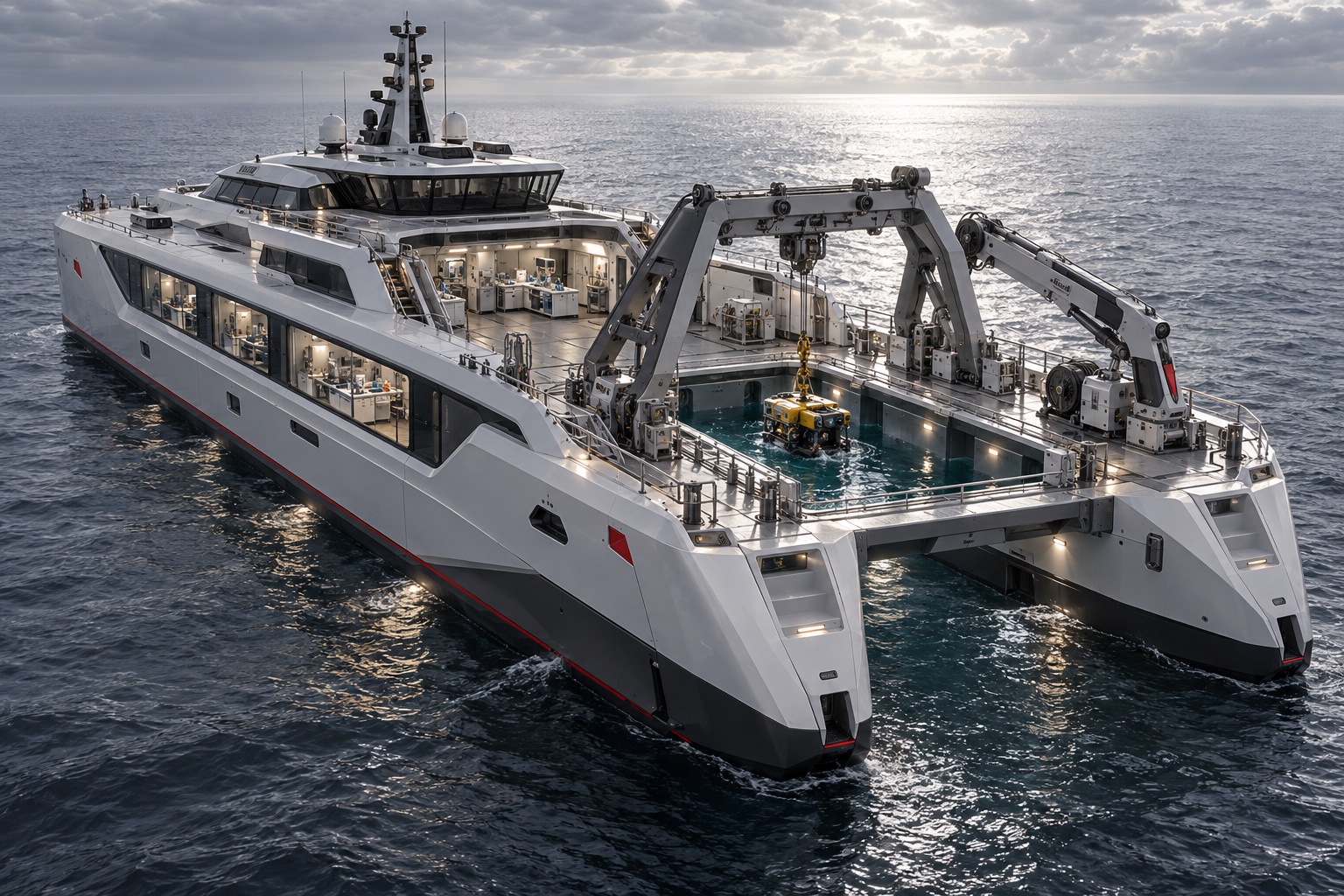
A laboratory ship that holds station and works below the hull.

Design & Mission Context

Sounding is a laboratory at sea. Wet and dry labs, a sensor mast, and a moonpool for the vehicles that go deeper. The hull is arranged around the science, not the other way around.

A research vessel must support the complete path from an instrument entering the sea to a sample reaching the laboratory. Deck equipment, the moonpool, utilities, and working spaces are considered together. The survey and the expected sea conditions determine the operating arrangement.

On station. The ship stays where the survey or the sample is.

The labs. Wet lab, dry lab, and the utilities the instruments need.

Over the side. Launch and recover the vehicles that work beneath the ship.

Explore Sounding
Tide Commons — Habitat
Habitat

Tide Commons

A floating community: berths, a common hall, and the utilities that keep it alive.

Design & Mission Context

Tide Commons is a modular neighborhood on the water. Glass and composite, not a cluster of houseboats. Power, water, and waste sit in one core, and the mooring is designed for the sea it will actually sit in.

The shared hall and individual rooms depend on a reliable service architecture beneath them. Power, water, waste, access, mooring, and resupply shape the neighborhood as a whole. The arrangement begins with how people will live there and the water in which the platform will be held.

A place to live. Berths and shared rooms, arranged as a community rather than a row of cabins.

The core. Power, water, and waste, closed up and serviced in one place.

The mooring. Held in the water it was designed for, and supplied like a shore town.

Explore Tide Commons
Longhaul — Ocean freight
Ocean freight

Longhaul

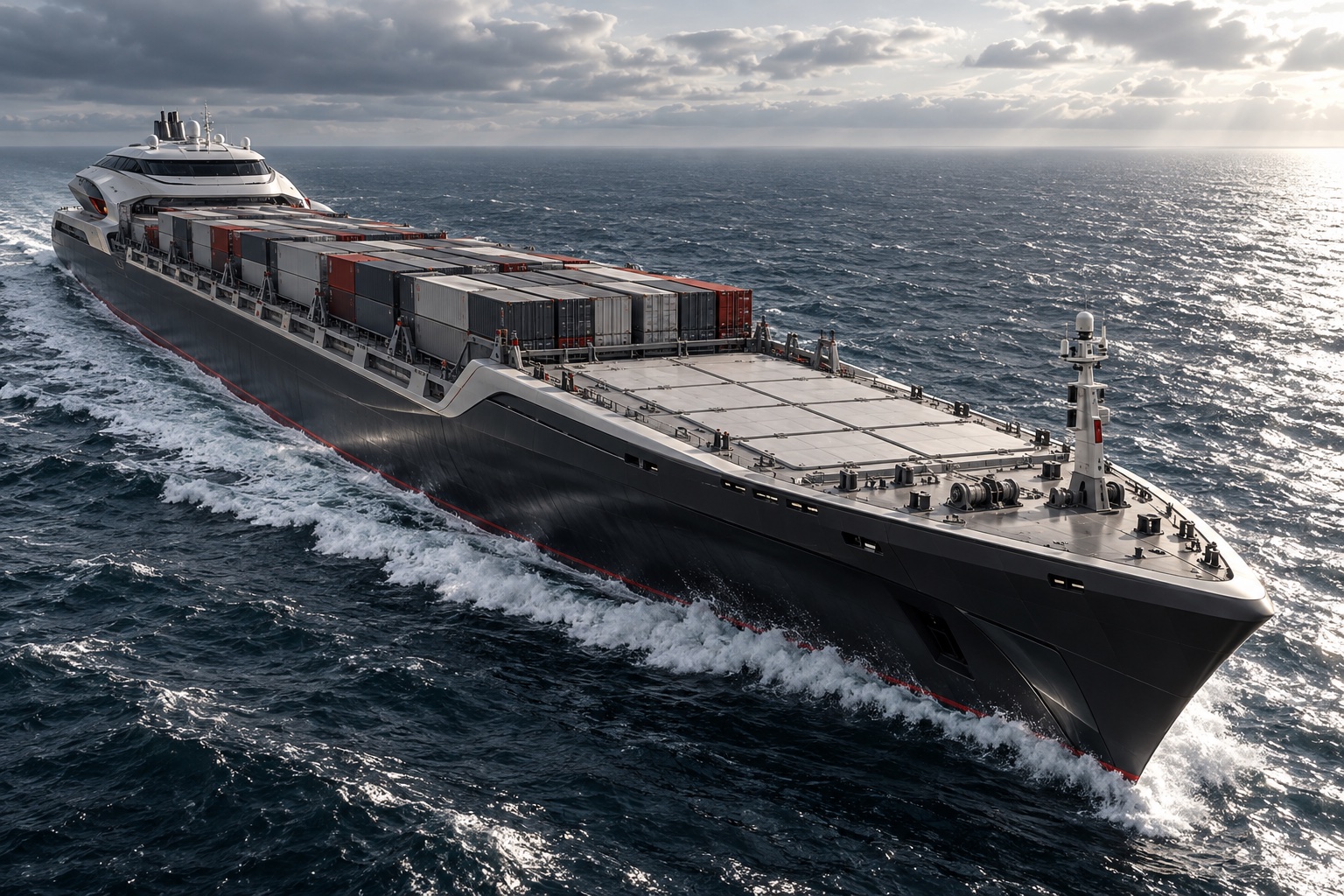
A long-haul freighter for open water, with a clean deck and a shore team.

Design & Mission Context

Longhaul is the blue-water hull. Dry cargo or bulk, hybrid-electric power, and Helm on the bridge. Tideline keeps the schedule with the rest of the fleet, so the ship is not an isolated voyage.

An ocean passage connects cargo capacity with weather, endurance, maintenance, and the ports at either end. Power and propulsion choices must support that complete journey. Shore operations provide the wider schedule and oversight that keep an individual vessel connected to the fleet.

The ocean. Weather, endurance, and a route that does not end at the next harbor.

The fleet. More than one ship, on a schedule the cargo and the ports can share.

The shore. Tideline watches the route. Helm sails it.

Explore Longhaul
Atoll — Habitat
Habitat

Atoll

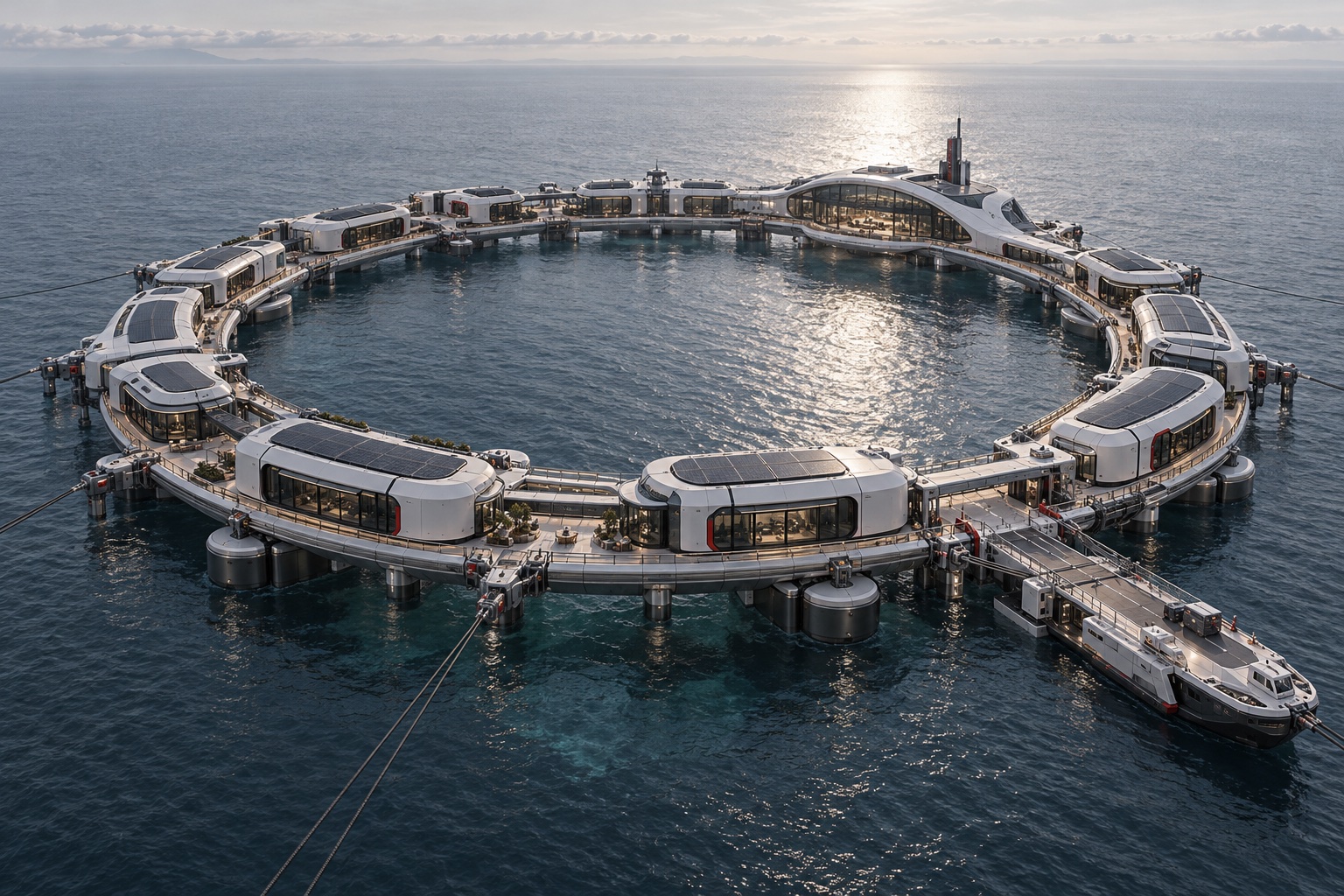
A ring of habitat modules on open water.

Design & Mission Context

Atoll is Tide Commons, arranged as a moored ring beyond a harbor. The same living platform: rooms, a shared hall, and a utility core, with the supply line and the sea state designed in from the start.

An offshore ring must respond to exposure as well as the needs of a community. Module connections, circulation, mooring, utilities, and resupply are developed around the selected water and its conditions. The open center and connected walkway are part of an architectural and marine system.

The ring. Modules and a common walk, around open water.

The exposure. Mooring and structure for a site that is not a sheltered dock.

The supply. Freight and the essentials, planned as part of living there.

Explore Atoll

Technical scope and availability are established through program review.

THESIS

Seventy percent of the planet runs on hulls designed for the last century.

The ocean carries the world's freight, hosts its hardest science, and could house its next communities — yet the vessels working it are slow to build, crew-heavy to run, and bespoke to a fault. Segal treats a ship the way we treat a building or a satellite: a design that is surveyed, modeled, fabricated, and operated as one continuous system.

The spine is autonomy. A Segal hull resolves its own sea state, holds station without a bridge crew, and reports its condition plank by plank. The same platform becomes a freighter, a research station, or a place to live — the boundary conditions change, the discipline does not.

// HEADLINE METRIC

Time-to-water

The only number that matters at a shipyard. We compress it — keel to commissioned hull in modular, fabricated sections rather than years on the ways — and we are not optimizing the old build, we are replacing it.

FLEET

Three theaters of the water. One hull platform.

Each line is a full vessel program in its theater. Together they share the same hull architecture, the same autonomy stack, and the same Segal discipline.

FreightCargo that sails itself.

Segal Logistics

Autonomous freight and supply hulls. Self-navigating cargo vessels that hold a sea lane, dock, and discharge without a bridge crew — built for ports, archipelagos, and routes too thin for a conventional ship.

  • Crewless transit & autonomous station-keeping
  • Modular cargo bays — dry, reefer, and bulk
  • Electric-hybrid drivetrain, shore-charge ready

0

Crew required on a standard transit

Explore Logistics
ScienceA laboratory that holds station.

Segal Research

Mobile ocean-research platforms. Sensor-dense vessels that survey, sample, and stream data from the surface to the deep — dynamically positioned over a site for weeks, with wet labs and ROV bays aboard.

  • Dynamic positioning over a survey site
  • Integrated wet labs & ROV / AUV launch bays
  • Full-spectrum sensor mast and seabed mapping

6km

Rated working depth, deployed systems

Explore Research
LivingBuild a coastline that floats.

Segal Habitats

Habitats engineered for life on the water. Floating residential and community platforms with closed-loop power, water, and waste — moored or mobile, sized from a single berth to a small town on the surface.

  • Closed-loop power, water & waste systems
  • Modular berths — single home to community scale
  • Storm-rated stability and dynamic mooring

100%

Off-grid, self-sustaining utilities

Explore Habitats
CAPABILITIES

One hull algorithm. Different boundary conditions.

Our core competency is autonomous design-to-deployment, re-skinned per mission. A freighter, a research station, and a habitat are the same hull problem with different payloads and dwell times. We solve it once, and outfit it three ways.

01SURVEY
02MODEL
03FABRICATE
04LAUNCH
05OPERATE
01Deployable today

Survey the sea state & model the hull

Sensors resolve route, sea state, and seabed to tolerance, then compile straight to a parametric hull model and a fabrication toolpath.

02Deployable today

Fabricate in modular sections

Hulls are built as standardized, prefabricated sections and joined on the ways — the same module becomes cargo bay, wet lab, or berth. Nothing waits on a one-off keel.

03Deployable today

Launch and hold station without a crew

Vessels self-navigate, dock, and dynamically hold position before anyone steps aboard. The autonomy stack is shared with every Segal theater, ground to orbit.

04Roadmap

Operate for the full service life

Hulls are handed over instrumented and certified, then monitored plank by plank — propulsion, structure, and utilities reported in real time. We own the outcome, not just the launch.

SYSTEMS

The platforms every hull ships with.

Every Segal vessel runs on a shared set of systems — the same spine across logistics, research, and habitats. Each one expands into its own program.

LIVEAutonomy

Helm

The autonomous navigation and station-keeping stack: collision-avoidance, dynamic positioning, and dock-and-discharge, certified to operate crewless on a standard transit.

See Helm
BETAConfigurator

Drydock

Configure and order a Segal hull from a live model — length, drivetrain, and module loadout for cargo, labs, or berths — with a real-time constraint engine and a delivery window.

Open Drydock
ROADMAPOperations

Tideline

The fleet-operations terminal: live position, hull-health telemetry, and utility status across every deployed vessel — survey to service life, reported in one place.

Open the planner
ENGAGE

Put a Segal hull in the water.

We work with operators, port authorities, research institutions, and developers who measure outcomes in time-to-water — for freight, for science, or for the people who will live aboard. If that's you, the conversation is short.

Commission a hullConfigure in Drydock

Direct to the founding team. No newsletter, no funnel.